
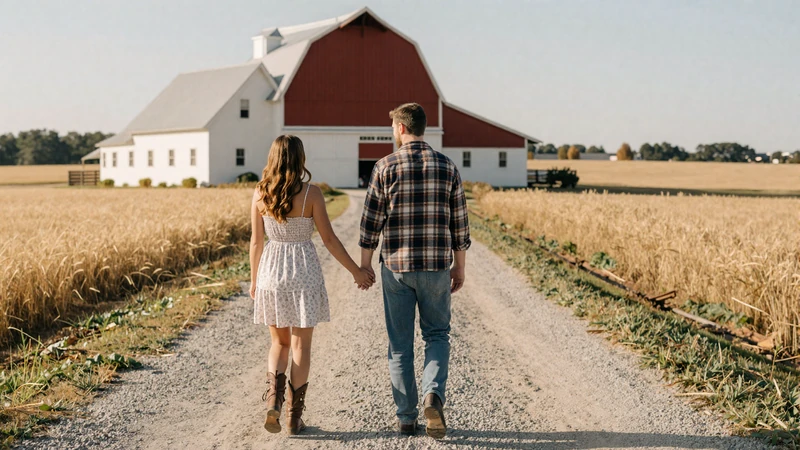
When Love Takes You Down a Dirt Road
Moving to a farm for love is one of the boldest relationship decisions a person can make. Sarah was a graphic designer in Chicago - coffee shops on every corner, a 12-minute train commute, and DoorDash for dinner three nights a week. Then she matched with Ryan, a corn and soybean farmer outside of Champaign, on a farmer dating site. Six months of weekend drives, one calving season watched through FaceTime, and a proposal under an Illinois sky later, she packed her apartment into a U-Haul and traded her studio for 800 acres.
She's not alone. According to the USDA's 2022 Census of Agriculture, new operators entering farming increased by 11% compared to 2017 - and a significant share are partners who relocated for love. A 2025 Pew Research study found that 23% of married couples in rural America include one spouse who grew up in an urban or suburban area. The city-to-farm love story isn't a fairy tale - it's a demographic trend.
But here's the thing: moving to the country for a relationship is equal parts romance and reality. This guide covers both - the sunset views and the 4:30 AM alarms - so you can make the leap with eyes wide open. If you're curious about what daily life looks like before you commit, start with our article on 10 things to know before dating a farmer.
- Moving to a farm for a partner requires honest preparation, not just enthusiasm
- The first year is the hardest - community, routine, and patience are your anchors
- Keeping your own identity, hobbies, and friendships is essential to long-term happiness
- Learning farm skills takes time, and your partner expects progress, not perfection
Setting Realistic Expectations Before the Move
The biggest mistake city-to-farm movers make is confusing a vacation with a lifestyle. Visiting your partner's farm on a crisp October weekend is charming. Living there through a February ice storm with no power for 18 hours is character-building. Both are real - and you need to be ready for both.
Here's what honest preparation looks like:
- Internet will be slower. Rural broadband averages 25 Mbps in many farming counties (FCC 2024 Broadband Report), compared to 200+ Mbps in metro areas. Streaming, remote work, and video calls require patience - and sometimes a Starlink dish.
- The nearest grocery store may be 30-45 minutes away. "Running to the store" becomes a planned trip, not a five-minute errand.
- Early mornings are non-negotiable. Livestock don't sleep in on Saturdays. Your partner's alarm will become your alarm.
- Physical demands are real. Farm life involves lifting, walking, standing in heat and cold, and getting dirty regularly.
- Weather controls the schedule. Plans change when a storm rolls in or harvest conditions shift overnight. Flexibility isn't optional - it's survival.
None of this should scare you off. It should prepare you. The couples who thrive are the ones who talked about these realities before the moving truck arrived.
Preparing for Your City-to-Country Transition
Preparation involves three concrete steps: finances, downsizing, and logistics. Treat this like a relocation project, not a spontaneous road trip.
| Preparation Area | Action Steps |
|---|---|
| Financial Planning | Save 3-6 months of living expenses. Rural cost of living is lower, but income may shift. Discuss shared vs. separate finances with your partner early. |
| Downsizing | Farmhouses have space, but your apartment furniture may not fit the aesthetic or function. Sell what doesn't serve rural life - buy what does after you arrive. |
| Transportation | You will need a vehicle. Public transit doesn't exist in most rural areas. A reliable truck or SUV with 4WD is a practical investment, not a luxury. |
| Remote Work Setup | If you're keeping your job remotely, test the farm's internet before committing. Budget for a satellite internet backup or mobile hotspot. |
| Emergency Readiness | Learn basic first aid, stock supplies for power outages, and know the nearest hospital's location. Rural emergency response times average 14 minutes vs. 7 minutes in cities (NHTSA, 2024). |
Your First Year: Adapting to Rural Life
The first twelve months are a recalibration of everything you thought you knew about daily life. Your sense of time, community, and self will all shift - and that's okay.
Months 1-3: The Honeymoon. Everything is new and exciting. Morning coffee on the porch. Stars you've never seen. The smell of fresh-cut hay. Enjoy it - this energy will carry you through the harder months ahead.
Months 4-6: The Adjustment. Novelty fades. You miss your friends. The nearest Target is an hour away. Your partner is working 14-hour days during planting or harvest, and you feel lonely. This is normal. Reach out to local community groups, churches, or volunteer organizations. The country lifestyle is built on community ties - you just need to find your way in.
Months 7-12: The Integration. You start recognizing faces at the feed store. A neighbor brings you pie. You learn the difference between a tractor and a combine - and you care. By the end of year one, the farm starts feeling less like your partner's place and more like your home.
Farm Skills Every Newcomer Should Learn
Nobody expects you to drive a combine on day one. But learning a few practical skills shows your partner - and the community - that you're invested, not just visiting.
- Basic animal care. Feeding schedules, recognizing when an animal is sick, and handling livestock safely. Start with chickens - they're forgiving teachers.
- Garden basics. Growing tomatoes, herbs, or greens gives you a tangible contribution to the household. The USDA Extension Service offers free gardening guides for every state.
- Equipment familiarity. Learn to operate an ATV, a riding mower, and eventually a tractor. Ask your partner to teach you - they'll love it.
- Food preservation. Canning, freezing, and dehydrating are essential farm skills that also save money. Your local extension office likely offers seasonal workshops.
- Basic repairs. Fence mending, plumbing fixes, and small engine maintenance. YouTube is your friend - and so is your partner's toolbox.
Consider this: a 2025 survey by Farm Bureau found that 61% of farm spouses who relocated from urban areas said learning one hands-on skill in the first six months was the single biggest factor in feeling at home.
Keeping Your Own Identity on the Farm
This is the section most guides skip - and it's the most important one. Moving for love doesn't mean erasing who you were before. The healthiest farm couples are the ones where both partners maintain their own interests, friendships, and sense of self.
- Keep your friendships alive. Schedule regular video calls with city friends. Plan quarterly visits in both directions. Isolation is the #1 relationship killer in rural relocations.
- Maintain a hobby that's yours alone. Reading, painting, running, photography, online courses - something that has nothing to do with the farm. It recharges you.
- Pursue remote work or local opportunities. Having your own income and professional identity prevents resentment. Many rural towns desperately need teachers, healthcare workers, and skilled tradespeople.
- Set boundaries around alone time. Living and working on the same property with your partner 24/7 can blur every line. Carve out space that's just for you.
"I'm not a farmer's wife who lost herself. I'm a photographer who lives on a farm with the man I love. There's a difference - and it matters." - Rachel, relocated from Portland to a cattle ranch in Montana
Stories from Those Who Made the Leap
Real advice hits different than theory. Here are voices from couples who've lived this transition - matched through platforms like Yougotmatched and now building lives together on the land.
I cried the first week. By the third month, I couldn't imagine going back. The silence that scared me became the peace I needed.

My advice? Learn to cook one great meal from scratch. Nothing earns respect in a farm family faster than a homemade pot roast after a long day.

The hardest part wasn't the farm work - it was making new friends. Once I joined the volunteer fire department, everything changed. Now this town is home.

Want to read more love stories from farming couples? Visit our success stories page for full-length features with photos and details.
Helpful Resources for Farm Newcomers
You don't have to figure this out alone. These organizations and programs exist specifically to help people new to farming and rural life:
- USDA Beginning Farmer and Rancher Program: Grants, loans, and educational resources for new agricultural operators and their families.
- Cooperative Extension Service: Every state has one. Free workshops on gardening, livestock, food safety, and community resources. Find yours through your state university's agriculture department.
- Farm Bureau's Young Farmers & Ranchers: A networking group for farmers under 35 - a great way to meet people and learn from peers.
- Rural Health Information Hub: Connects you with healthcare, mental health, and wellness services in rural areas.
- Local community boards and Facebook groups: Search "[Your County] Community" on Facebook. These groups are where rural neighbors share everything from road conditions to free firewood.
The bottom line: moving to a farm for love is one of the most rewarding decisions you can make - if you go in prepared, stay curious, and give yourself grace during the adjustment. The land will grow on you. And the person you moved for? They'll love you even more for trying.