
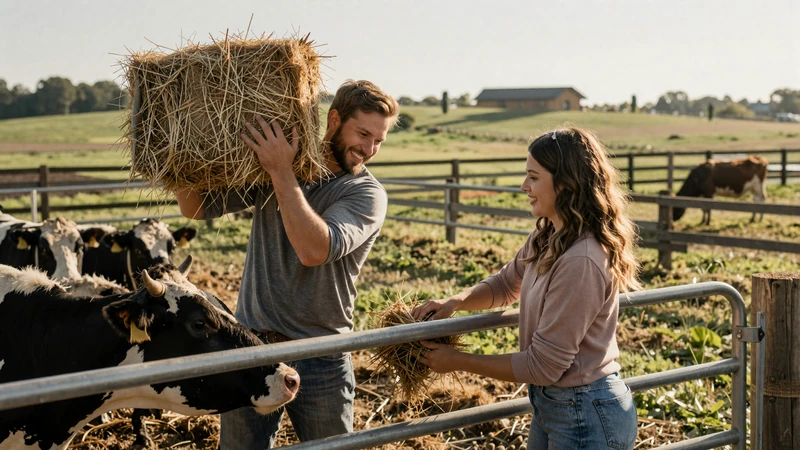
Love Grows Different on a Farm
Farmer relationship advice starts with one honest truth: farm life will test your partnership in ways city couples never experience. When a water line breaks at 2 AM during a January freeze, nobody checks whose turn it is - you both get up, put boots on, and fix it together. That's the foundation of every strong farming marriage.
According to a 2025 USDA Economic Research Service report, 86% of U.S. farm operators work alongside a spouse or partner. Farming isn't just a job you leave at the office - it's a shared life, a shared business, and often a shared financial risk. A study from Purdue University's Center for Rural Development found that farm couples who communicate openly about both the operation and their relationship report 34% higher satisfaction than those who keep farm talk and personal talk separate.
The rewards, though, are extraordinary. Couples who farm together share sunrises, build something tangible with their hands, and raise families in tight-knit communities. They understand each other's exhaustion, celebrate each other's harvests, and know that love - like crops - needs tending every single day. Whether you met on a farmer dating site or at the county fair, these tips will help your relationship thrive alongside your operation.
- Communication during high-stress seasons prevents resentment buildup
- Dividing responsibilities by strength - not gender - works best
- Scheduled off-farm time protects relationships from burnout
- Separate farm finances from personal finances early
- Partners new to farming need patience, not a crash course
Talking Through the Tough Seasons Together
Communication is the single most important skill for farm couples, especially during calving season, planting, or harvest when stress peaks and sleep disappears. The problem isn't that farmers can't communicate - it's that exhaustion turns conversations into transactions. "Did you call the vet?" replaces "How are you holding up?"
Here's what works, based on advice from agricultural family therapists and couples who've been through it:
- Set a daily 10-minute check-in. Not about the farm - about each other. Over morning coffee or after dinner. This small habit prevents weeks of silent frustration from building up.
- Use "I" statements during conflict. "I feel overwhelmed when I'm handling feeding alone" lands differently than "You never help with feeding."
- Acknowledge the stress out loud. Saying "This week is brutal" validates what you're both feeling. It's not complaining - it's honesty.
- Schedule tough conversations for low-stress periods. January is better than July for discussing whether to lease that extra 40 acres. Major decisions need rested minds.
A 2024 Farm Bureau survey found that 62% of farming couples who scheduled regular non-farm conversations reported stronger marriages than those who didn't. Ten minutes a day is less time than it takes to check cattle - and it pays off just as well. For more on navigating the rhythms of farming seasons as a couple, see our seasonal dating guide for farmers.
Sharing the Load Without Keeping Score
Division of labor on a farm can either unite a couple or create deep resentment. The best farm couple tips aren't about splitting everything 50/50 - they're about playing to each other's strengths and being willing to flex when the situation demands it.
What Works
- Assign tasks based on skill and preference, not tradition
- Cross-train on critical operations - both should know how to run equipment
- Say "thank you" for routine work - it matters more than you think
- Renegotiate roles seasonally as workloads shift
- Hire help before burnout hits, not after
What Doesn't
- Assuming your partner "should just know" what needs doing
- Keeping a mental tally of who did more this week
- Criticizing how your partner completes a task you delegated
- Refusing to learn "their" side of the operation
- Treating the household as the "easy" job
Here's the thing: traditional gender roles still hold strong in many farming communities, and that's fine when both partners genuinely prefer it. But research from Iowa State University Extension shows that farms where both partners participate in decision-making - from crop rotation to equipment purchases - are 28% more financially resilient than those where one partner controls all operational decisions.
Finding Balance When the Farm Never Stops
Work-life balance on a farm is a myth if you define it the way corporate America does. The farm doesn't clock out at 5 PM. Animals need feeding on Christmas. Irrigation doesn't care about your anniversary. But balance is still possible - it just looks different.
- Block off one evening per week. Call it date night, call it "no-chores night" - the name doesn't matter. What matters is consistency. Even during harvest, one evening of grilling steaks on the porch together recharges everything.
- Take off-farm trips in the slow season. Winter (November through February) is when most farming couples have breathing room. A weekend getaway - even just two hours away - reminds you that you're partners, not just coworkers.
- Create physical boundaries. If possible, don't bring paperwork into the bedroom. The kitchen table can be the office, but the couch after 8 PM is for Netflix, not spreadsheets.
- Use technology to save time. Automated feeders, moisture sensors, and herd management apps free up hours that can be invested in your relationship instead of routine monitoring.
Making the Most of Your Moments Together
Quality time on a farm doesn't require grand gestures. It requires intention. The best farming couples know how to turn ordinary moments into connection points - and they've been doing it for generations.
Consider these ideas that real farm couples swear by:
- The morning coffee ritual. Ten minutes on the porch before the day starts. No phones, no chore lists. Just two cups of coffee and the sound of the rooster.
- Riding fences together. Checking fence line on horseback or in the truck is work - but done together, it becomes time. Some of the best conversations happen on a slow drive along the property line.
- Shared harvest meals. After a long day in the field, cooking dinner together from what you grew is deeply satisfying. It's the farm couple's version of a restaurant date.
- Sunset from the tailgate. Park the truck on a hilltop, sit on the tailgate, and watch the sky change. It costs nothing and means everything.
"We ride the fence line every Sunday after church. It's our time - just us, the horses, and forty years of memories along that property line." - Ruth & Gene, cattle ranchers, Montana, married 43 years
Financial Planning for Farm Couples
Money is the leading cause of conflict in American marriages - and farming adds layers of complexity. Income is seasonal and unpredictable. A single hailstorm can wipe out months of expected revenue. Equipment repairs don't wait for cash flow to stabilize.
Smart financial habits protect both the farm and the marriage:
- Separate farm and personal accounts. The operation should have its own checking, savings, and credit lines. Personal spending shouldn't compete with seed money.
- Build a 3-month emergency fund for the household. USDA data shows farm household income fluctuates by 20-40% year-over-year. A personal cushion prevents marital stress when the farm account runs thin.
- Review finances together monthly. Both partners should understand the full picture - assets, debts, insurance, and cash flow projections.
- Plan major purchases in advance. Buying a $300K combine shouldn't be a surprise. Discuss big investments during the slow season when emotions aren't running high.
When Your Partner Is New to Farm Life
Not every farm couple starts with two people who grew up on tractors. Increasingly, farmers are finding partners who come from towns, suburbs, or even cities - people who fell in love with the person first and the lifestyle second. If your partner is new to farming, patience is not optional. It's essential.
- Start with the "why," not the "how." Before teaching your partner to operate equipment, share why you farm. The passion is contagious - the chore list is not.
- Let them find their own role. Maybe they're not comfortable with livestock but love the garden, the books, or the farmers market booth. Every contribution matters.
- Don't mock what they don't know. Everyone has a first day. Laughing because they can't tell alfalfa from clover builds a wall, not a bridge.
- Help them build their own community. Farm Bureau events, church groups, and county extension programs connect newcomers with neighbors who become lifelong friends.
- Protect their identity. Your partner is not "the farmer's wife" or "the rancher's husband." They're a whole person who chose to share your life. Make sure they have space for their own interests, career, and friendships.
If you're considering a move to the farm for love, our guide on moving to a farm for love covers everything from realistic expectations to practical preparation.
Advice from Farmers Who've Made It Work
The best thing we ever did was agree that Sundays are ours. No fieldwork, no equipment repairs. Church, a big lunch, and an afternoon nap. Twenty-two years later, we've never broken that rule.
I grew up in Atlanta. Moving to his family's cattle ranch in Nebraska was the hardest thing I've ever done - and the most rewarding. His patience during my first calving season saved our marriage before it even started.
We keep a whiteboard in the kitchen. Left side is farm tasks, right side is us-tasks: date nights, trips to plan, things we want to try together. If the right side is ever empty, we stop and fill it first.
These couples found each other - and built lasting partnerships rooted in shared values, honest communication, and a willingness to put the relationship first even when the farm demands everything. For more inspiring stories, visit our success stories page.